> For the complete documentation index, see [llms.txt](https://help.rechat.com/llms.txt). Markdown versions of documentation pages are available by appending `.md` to page URLs; this page is available as [Markdown](https://help.rechat.com/appendix/brokerage-set-up/marketing-template-guidelines/figma/prevent-text-overflow-with-truncate.md).
# Prevent Text Overflow with Truncate
When a text layer is connected to a Rechat placeholder (for example, Listing Description), the actual data may be much longer than the sample text used in your design.
If truncation is not configured, the text can overflow and break the layout once real content is applied.
### How to Prevent It in Figma
1. Select the text layer connected to the **Rechat placeholder**
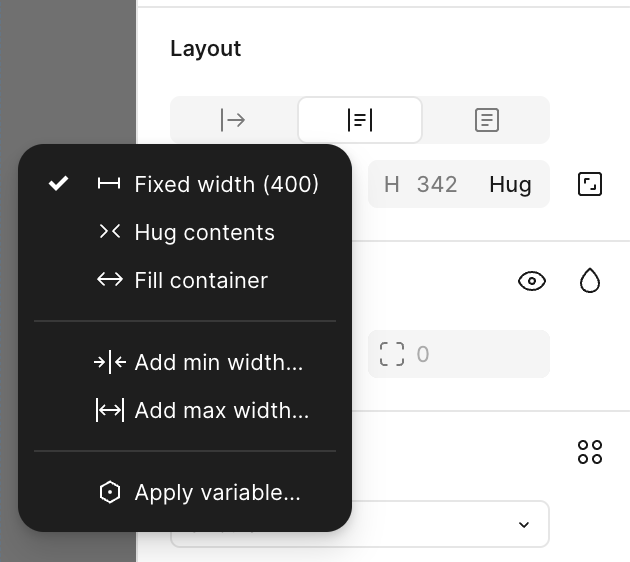
2. In the right panel, make sure the text is set to **Fixed width** (not Auto width).
{% hint style="info" %}
**Pro tip:** If the text is inside an Auto Layout frame, you can set it to **Fill container** so it respects the parent width and truncates correctly.
{% endhint %}
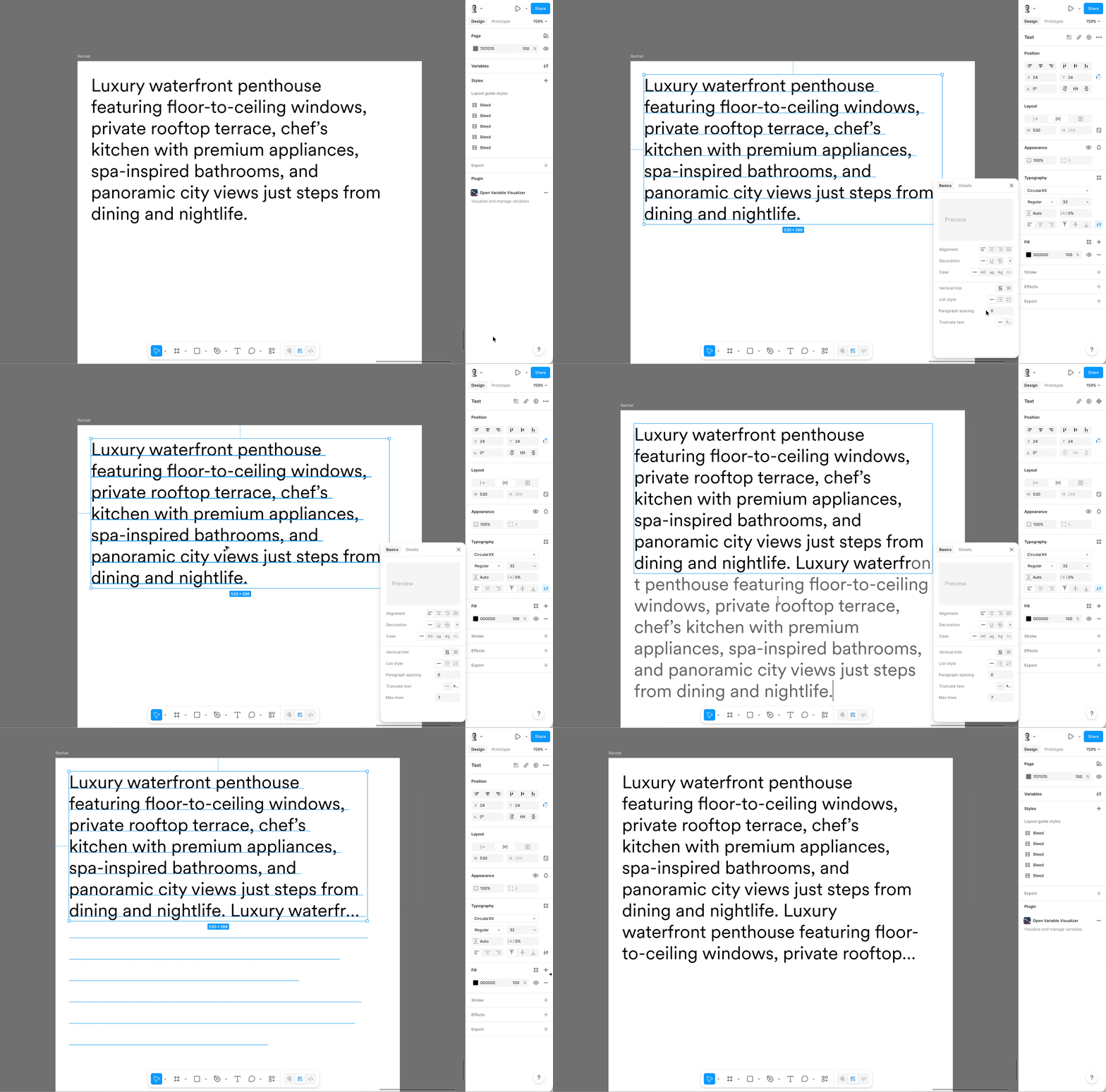
1. Enable **Text overflow → Truncate**
2. Define how many lines the text is allowed to have (for example, 1, 2, or 3 lines)
3. Make sure the text has a defined width (or is inside a fixed-width frame)
Figma will limit the text to the number of lines you set and automatically add an ellipsis (…) if the content exceeds that limit.
How to Truncate text layers, using Figma Truncate feature.
***
### Important
* Truncation hides extra text. If the real content exceeds the available space, it will appear as “…”
* Make sure truncating the text does not remove critical information in your layout
* Do not use **Auto width** for dynamic placeholders
---
# Agent Instructions
This documentation is published with GitBook. GitBook is the documentation platform designed so that both humans and AI agents can read, navigate, and reason over technical content effectively. Learn more at gitbook.com.
## Querying This Documentation
If you need additional information that is not directly available in this page, you can query the documentation by asking a question.
Perform an HTTP GET request on the following URL with the `ask` and `goal` query parameters:
```
GET https://help.rechat.com/appendix/brokerage-set-up/marketing-template-guidelines/figma/prevent-text-overflow-with-truncate.md?ask=&goal=
```
`ask` is the immediate question: it should be specific, self-contained, and written in natural language.
`goal` is what the user is ultimately trying to achieve, the reason they need the answer. Sharing it helps GitBook give you a better, more relevant answer. A goal is most helpful when it describes the outcome the user wants rather than restating the question. For example, with `ask=how do I create an API token`, a goal like `automate deployments from our CI pipeline` lets GitBook tailor the answer to that use case.
The response will contain a direct answer to the question and relevant excerpts and sources from the documentation.
Use this mechanism when the answer is not explicitly present in the current page, you need clarification or additional context, or you want to retrieve related documentation sections.